 Nanoscience is a study for very few people, however these people have dedicated their lives to studying the science that is potentially very important to the twenty first century and the future of the human race.
Professor James K. Gimzewski is the nano scientist that is responsible for teaching and educating the kids of the new generation about nano science and nanotechnology. Professor Gimzewski said that nano tech has the "potential to change the world in terms of social and economic types of values. Many of the topics that have been covered throughout the class have proven to be vital to art and the suvival of the human race. these topics are very important just like nano science and nanotechnology

At an exhibition for nanotechnology there was a quote from the website saying "Nano_essence is an interactive audio-visual installation where the viewer interfaces with the visual and sonic presentation through his or her own breath"(art.base.co).
In a nut shell there is a short and easy definition of Nanotechnology and it is "Nanotechnology is science, engineering, and technology conducted at the nanoscale, which is about 1 to 100 nanometers"(nano.gov).

There is a sense of urgency to nanotechnology because not many people know much about it. "Nanotechnology is so new, no one is really sure what will come of it. Even so, predictions range from the ability to reproduce things like diamonds and food to the world being devoured by self-replicating nanorobots"(howstuffworks).
For many years to come we will continue to learn about nanoscience and the technology from men and women from all over the world who are studying these life saving phenomenons. The kids in school and studying every day is the key to the future of nano science and nanotechnology in the world.
Curtin, John. “John Curtin Gallery.” Art.Base, 11 Mar. 2010, art.base.co/event/2104-art-in-the-age-of-nanotechnology#7.
“Nanoscience and Technology .” Nature News, Nature Publishing Group, www.nature.com/subjects/nanoscience-and-technology.
National Geographic Society. “Nanoscience.” National Geographic Society, 14 Oct. 2013, www.nationalgeographic.org/media/nanoscience/.
Strickland, Jonathan. “How Nanotechnology Works.” HowStuffWorks Science, HowStuffWorks, 25 Oct. 2007, science.howstuffworks.com/nanotechnology.htm.
“What Is Nanotechnology?” Nano, www.nano.gov/nanotech-101/what/definition.
Curtin, John. “John Curtin Gallery.” Art.Base, 11 Mar. 2010, art.base.co/event/2104-art-in-the-age-of-nanotechnology#7.
“Nanoscience and Technology .” Nature News, Nature Publishing Group, www.nature.com/subjects/nanoscience-and-technology.
National Geographic Society. “Nanoscience.” National Geographic Society, 14 Oct. 2013, www.nationalgeographic.org/media/nanoscience/.
Strickland, Jonathan. “How Nanotechnology Works.” HowStuffWorks Science, HowStuffWorks, 25 Oct. 2007, science.howstuffworks.com/nanotechnology.htm.
“What Is Nanotechnology?” Nano, www.nano.gov/nanotech-101/what/definition.“Nanoscience and Technology .” Nature News, Nature Publishing Group, www.nature.com/subjects/nanoscience-and-technology.
National Geographic Society. “Nanoscience.” National Geographic Society, 14 Oct. 2013, www.nationalgeographic.org/media/nanoscience/.


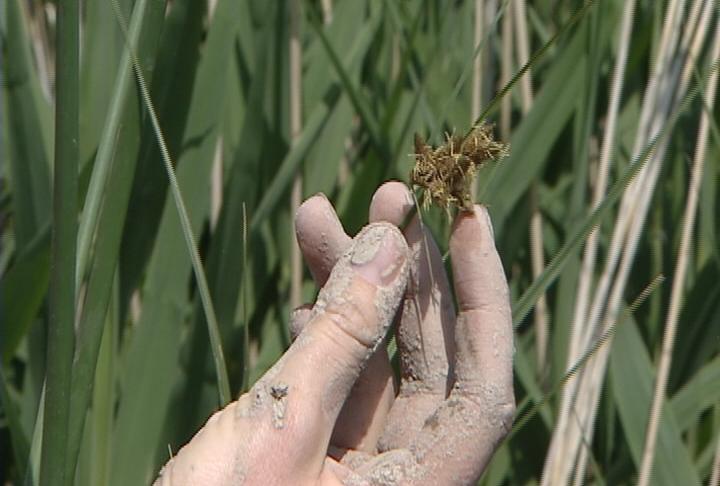 "One of the country's most invasive plants, sometimes dubbed the "super weed," may be getting even stronger" (KSL). This is one of the most invasive plants on the planet and could be a danger to our society and farming. The process of the plant takes out and eliminates the neighboring plants. Our farming systems could be dangerously effected by this horrible plant.